
2011 was a hinge year. A year when uprisings, disasters, and new technologies promised to shake the foundations of power. But most of those hopes were crushed, co-opted, or simply ran out of steam — setting the stage for a darker, more cynical decade.
The Arab Spring: Hope Meets the Wall
It began with fire — Mohamed Bouazizi’s self-immolation in Tunisia sparked a wave of revolts across the Arab world. For a few months, it looked like history was turning toward freedom. Crowds in Cairo’s Tahrir Square toppled Hosni Mubarak. NATO planes flew over Libya as Gaddafi fell.
But within years, Egypt was back under military rule, Libya descended into chaos, and Syria’s protests turned into a grinding civil war that reshaped global politics and sent millions fleeing. The hope of a democratic Middle East collapsed into a mix of war, strongman rule, and repression.
Occupy Wall Street: The 99% Fizzle
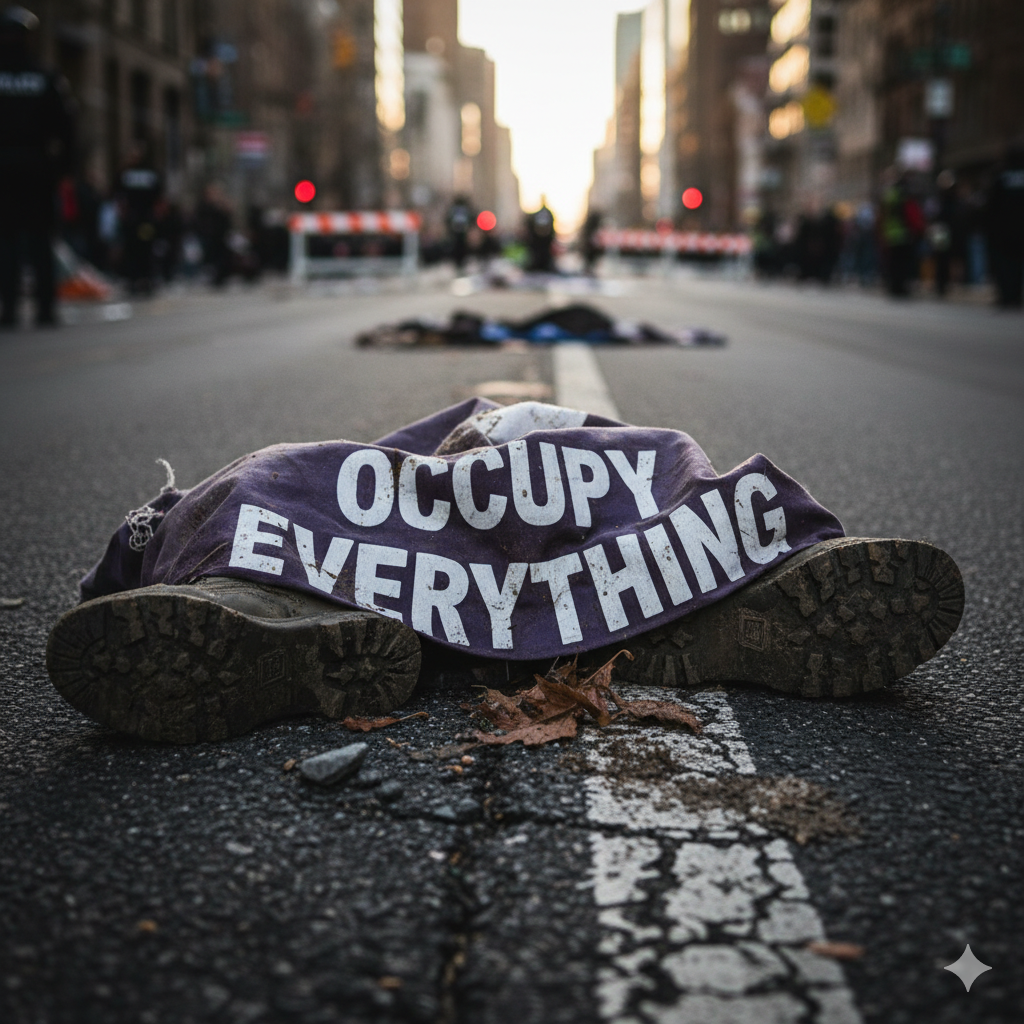
In New York, tents filled Zuccotti Park. Occupy Wall Street turned anger at the 2008 crash into a simple, potent frame: the 99% vs the 1%. But Occupy never found a way to turn its slogan into policy. The parks were cleared, the banks got bigger, and the world moved on — though the language of inequality stuck around for Bernie Sanders, Elizabeth Warren, and AOC to use later.
The Greek Experiment: Democracy Meets Finance
Europe got its own moment of rebellion when Greece elected Syriza, a far-left party that promised to reject EU-imposed austerity and renegotiate its crushing debt. In 2015 they put it to a referendum: Greeks voted no to the bailout terms. Brussels and Frankfurt responded with capital controls, bank shutdowns, and a fresh ultimatum.
Syriza folded. A second vote produced the “right” answer. The lesson was brutal and clear: you can vote for anything you like — as long as you don’t vote against bond markets. For many, this was the moment European democracy was revealed to be a thin veneer over financial discipline.
Bitcoin’s Rise
Meanwhile, in a corner of the internet, something else was happening. Bitcoin, launched in 2009, jumped from under $1 to $30 before crashing. It was the first proof that money could exist outside the banking system. In hindsight, it was the quiet start of an entirely new financial architecture — one that would grow into the trillion-dollar crypto industry.
Fukushima and the Return of Fear
The March 2011 tsunami devastated Japan, killing nearly 20,000 people and triggering the Fukushima nuclear disaster. Overnight, nuclear went from “green solution” to “never again” in much of the world. Germany shut its reactors. Others paused development. The decade saw more coal, more gas, and more emissions as a result.
The Global Protest Wave
2011 saw mass demonstrations far beyond the Arab world:
Spain’s Indignados filled plazas protesting austerity.
Greece exploded with strikes and riots.
London burned in the Mark Duggan riots.
Wisconsin saw a showdown over public-sector unions.
Everywhere, governments held firm, and most of these movements lost. The frustration fermented and, by mid-decade, boiled over into populism — Brexit, Trump, Five Star in Italy, Mélenchon in France.
The Internet Grows Teeth
This was the year the internet stopped feeling like a utopia and started looking like a battlefield. The Arab Spring was called the “Facebook Revolution,” but Egypt cut the internet during protests, China doubled down on censorship, and Western governments began to notice the power of platforms.
Anonymous was at its peak, hacking HBGary Federal and exposing surveillance contractors. Wikileaks’ Cablegate still reverberated. It felt like the net could destabilize empires — and empires took notice.
Verdict
2011 was not just a year of uprisings — it was a year of lessons. Lessons about how far people could push and how far power would push back. The optimism of the early 2010s — that you could topple dictators with a hashtag, that you could vote your way out of austerity, that the internet would make us free — didn’t survive.
But the failures of 2011 also planted seeds: distrust of elites, hunger for alternatives, and the birth of parallel systems like crypto. It may not have been the year that changed the world — but it was the year the cracks became visible.