
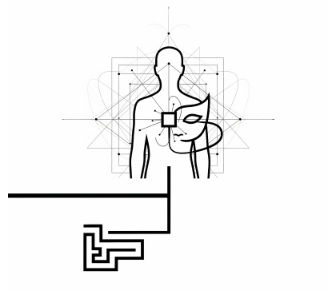
The inspiration for this idea is Bitcoins Proof of Work, I thought a better use for effort as a method for keeping out bots and bad actors was in the identity layer. This is what we came up with.
Overview
The PoHW identity system is a decentralized, privacy-preserving method to establish one-time, persistent human identity without reliance on biometrics, state documents, or centralized databases. It is inspired by Proof-of-Work, Idena-style human verification, and early concepts like key mailouts, reimagined for the age of ambient sensing and cryptographic privacy.
The goal: make identity hard for AI, bots, and farms, but accessible to any real human. Once.
—
Core Principles
1. Proof, not papers: No need for passports, selfies, or KYC.
2. Effort over entitlement: A human must think, act, and be present in the world.
3. One identity per person: Enforced probabilistically, not through hard exclusion.
4. Ambient presence as trust: Your environment, motion, and presence are your witness.
5. Privacy-first: Nothing you reveal can be used to track or identify you later.
—
How It Works
1. The One-Time Human Test (PoHW)
A 5-minute branching maze of creative, perceptual, memory, and timing tasks.
Designed to be easy for humans, hard for bots or crowdsourced farms.
No correct answers per se; instead, fluency, timing, and behavior are used to generate a proof transcript hash.
User signs this transcript hash with a newly generated keypair.
2. Ambient Entropy Capture
After the test, the device collects a bundle of ambient signals:
Nearby Wi-Fi and Bluetooth identifiers
Accelerometer and gyroscope jitter
Light level (if available)
Ambient audio sketch (FFT only, not stored)
Local timestamp, coarse IP region, and timezone
These are hashed and signed as a location fingerprint, proving that the user is somewhere, doing something, once.
3. Initial Identity Token Creation
The signed transcript hash + location fingerprint + public key are submitted to the network.
This becomes a Tier 2 identity: unique, fully proven, and pseudonymous.
—
Trust Layers
Tier 0 – Faucet Identity
Anyone can create a wallet and receive a small, fast-evaporating UBI.
Intended for rapid onboarding. Entropy and PoHW optional.
Tier 1 – Partial Proof
Maze-only or entropy-only submission.
Medium evaporation rate. Intended for users with partial access to environment or input.
Tier 2 – Full PoHW Identity
Completed maze + valid entropy bundle.
Full access to UBI, voting, and dApps.
Tier 3 – Anchored ID
Escalation layer if identity is challenged or lost.
Requires location challenge (see below), witness ring, or social vouch.
—
Collision Detection & Anti-Farming Measures
If two or more identities produce too-similar entropy fingerprints too often, the system will:
Flag them for verification.
Issue a Location Challenge: each must submit a new entropy proof from a different physical location within 24 hours.
Locations are drawn from open public landmarks within reachable distance.
The goal is to verify separateness without breaching privacy.
Failure to respond leads to temporary freezing or demotion.
Additionally, the system collects ongoing fuzzy environmental fingerprints each time a user transacts, sends a message, or interacts with the network. These are hashed sketches of:
Wi-Fi/Bluetooth identifiers
Timestamps and time buckets
Light, motion, and other minor ambient cues
Behavioral timing metadata (e.g., response patterns)
These fingerprints are used to:
Detect long-term behavioral or location pattern overlap across accounts
Reinforce user uniqueness through routine presence
Flag likely duplicate/farmed identities while preserving anonymity
These checks are done using fuzzy-matching techniques like SimHash or LSH and do not expose raw data. Real users naturally accumulate ambient uniqueness over time; synthetic identities cannot.
—
Privacy and Safety
No GPS coordinates, raw audio, or identity data is stored.
All entropy is hashed before submission.
Co-location (“seeing”) is recorded only as ephemeral, rotating pseudonyms.
Users control their keys; no identity can be reassigned without their action.
—
Ambient Social Trust (Optional)
Places (like cafes) and people can emit opt-in pseudonymous beacons.
Frequent mutual sightings create cryptographic “soft links.”
These links form a local trust web over time.
Useful for identity recovery, fraud detection, and social reputation.
—
Why This Matters
PoHW offers an alternative to surveillance capitalism, biometric centralization, and bureaucratic gatekeeping. It enables digital personhood based on being, not belonging.
It’s not perfect. But it’s human.
PoHW – how it works
Decentralized Ephemeral Identity Test Architecture
(aka “burn-after-verification” PoHW)
Step 1: PoHW Test Is Created
The user creates a challenge-response test package locally (e.g. video, typing, liveness, environment).
A hash of the package is generated (SHA-256).
Optionally, it’s encrypted using:
Verifier’s public key (if trust is known), or
A shared temporary group key (e.g., quorum of validators)
—
Step 2: It’s Shared Peer-to-Peer
Via direct P2P transfer (Bluetooth, LAN, QR, gossip file share)
Or uploaded to IPFS/torrent temporarily
TTL (time-to-live) seeded by the user
Only needed until the test is verified
—
Step 3: Verifier Runs the Test
Verifies the file hash
Opens and runs challenge checks
(e.g., liveness, audio, entropy-fingerprint)
Step 4: Test Hash + Result Logged in Ledger
A record is written into Chaos Chat like:
{
“type”: “PoHW-Pass”,
“user”: “@don123”,
“test_hash”: “0xf00d123…”,
“verifier”: “@local-node-77”,
“score”: 91.3,
“expires”: “2026-05-23”,
“sig”: “verifier_sig_here”
}
—
Step 5: File is Deleted or Allowed to Decay
The test package is:
Deleted from local storage (user + verifier)
Unpinned from IPFS or no longer seeded on torrent
Only the hash and a proof of verification live on-chain
If needed, the test can be re-challenged:
User runs a new test (generates new package + hash)
New proof is posted
—
Why This Works
No central storage: Nothing needs to live forever
Accountability comes from hash + signatures on-chain
Replayability optional: Only needed during dispute or re-verification
Decentralized flexibility: Anyone can verify, not just “the server”
—
Bonus: Self-Hosted Archive Model
If a user wants proof portability:
They can keep their own encrypted archive
Or share it selectively with local nodes, family, or trusted agents
Think of it like a self-sovereign identity binder with test receipts